You can explore Sichuan cooking without making every meal a test of chilli tolerance. The useful approach is to choose a preparation that suits you, then ask about its components. Simply saying less spicy can leave red oil, numbing Sichuan pepper, a seasoned filling or a prepared sauce in place. This guide focuses on Chengdu ordering decisions and documented local food traditions. It addresses flavour preferences; allergies, religious requirements and other strict restrictions need their own explicit ingredient and preparation conversation.
Separate chilli heat, numbing pepper and your actual requirement
Chilli is 辣椒, làjiāo. Sichuan pepper is 花椒, huājiāo, associated with the numbing quality described as 麻, má. These are different ingredients. Someone who dislikes chilli heat might enjoy another seasoning, while someone avoiding both needs to say so. 不要辣椒,也不要花椒。 Bú yào làjiāo, yě bú yào huājiāo. — No chilli and no Sichuan pepper, please.
少辣, shǎo là, means less spicy; it does not define a measurable amount or the ingredients a kitchen will remove. If your preference is no added chilli, say that directly and ask whether the base already contains it. A cook can omit a final garnish more easily than remove seasoning from a prepared filling or sauce.
Do not call an allergy a dislike to make ordering feel simpler. Conversely, a preference does not need to be presented as an allergy. Give staff the real requirement, allow a clear answer and use a different dish or business when the kitchen cannot establish what is in the food.
Start by comparing clear-broth and red-oil versions
The Ministry of Commerce’s digital museum entry for Zhong dumplings documents both red-oil and clear-soup versions. Its production description also includes Sichuan-pepper water in the pork filling. This is a useful example of why an uncoloured broth or an omitted sauce does not prove that every component is free of a seasoning.
Ask whether 清汤水饺, qīngtāng shuǐjiǎo, is available at the actual branch. Confirm the filling and stock, and ask whether any chilli oil is added at the end. If only a fixed red-oil product is being served, it may be better to select another dish rather than request an impossible reconstruction.
Use the written dish name rather than an English phrase such as plain dumplings. Plain can be interpreted as no dipping sauce while the filling remains unchanged. Check the successful order on the menu or screen before it is sent to the kitchen.
Try chaoshou as a distinct local ordering option
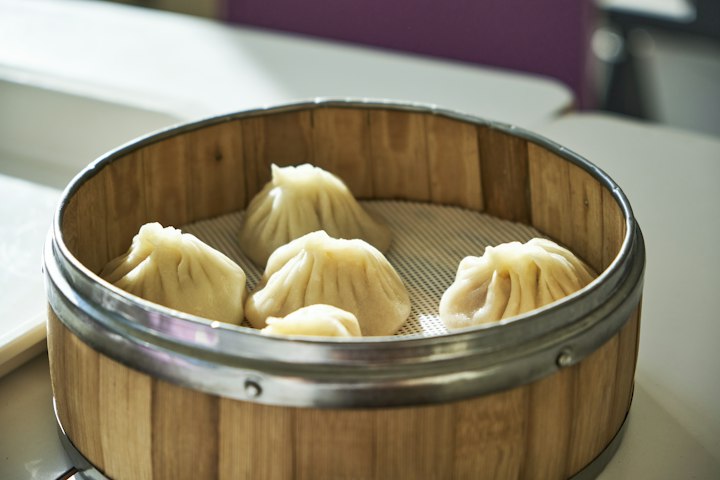
Chaoshou, 抄手, chāoshǒu, is the Sichuan menu name for wonton-like filled parcels. The Commerce Ministry’s Long Chaoshou entry describes clear broth and red-oil preparations. Its documented clear version includes pepper, chicken fat and stock; clear therefore describes appearance and style, not a plant-based or seasoning-free meal.
Ask about 清汤抄手, qīngtāng chāoshǒu, and verify what is available today. A shop may offer several broths, a mixed snack set or a limited service menu. A set can contain unrelated spicy items even if the bowl you selected is mild.
For a quick lunch, one verified bowl and a separately agreed side can be more manageable than a large tasting set. Someone seeking stronger seasoning can ask whether a condiment is available on the side, keeping the base order understandable for everyone. That arrangement depends on the kitchen and does not create a strict separation guarantee.
Look for a broader menu when you want a full meal
Sichuan restaurant traditions extend beyond noodles and red oil. The Commerce Ministry’s Rongleyuan entry describes both banquet and family-style cooking and a substantial soup tradition. This supports looking at a full restaurant menu rather than assuming a hotpot specialist is the only way to eat locally.
Ask staff to suggest a dish that can actually be prepared without chilli, then ask what gives it flavour. Steaming, stewing or a pale appearance alone do not answer that question. A clear-looking dish may use a complex meat stock; a smoked or braised product may have been seasoned well before service.
Build a meal around a confirmed main dish, an agreed vegetable preparation and rice or another suitable staple. Do not infer the whole menu from one photograph or assume a historical brand record proves today’s availability. Check the branch, current menu and any advance-order requirement for elaborate dishes.
Be careful with sweet names and cold snacks
A sweet note can coexist with chilli. The Commerce Ministry’s Zhang Laowu record describes a seasoning system using red chilli oil, Sichuan pepper, sesame and other prepared components. Its food range includes jelly and noodles. Ask about the sauce on the actual item rather than using the word sweet or a pale base ingredient to predict heat.
Cold dishes are worth checking before ordering because a bowl may already have been mixed or dressed. Ask 调料可以另外放吗? Tiáoliào kěyǐ lìngwài fàng ma? — Can the seasonings be served separately? If the answer is no, choose another preparation rather than scrape visible red oil away and assume the problem has been solved.
The same reasoning applies to a sauce with no obvious pieces of chilli. Oil, paste and powdered seasoning can be incorporated without remaining recognisable. Staff confirmation is more useful than judging heat from colour alone.
Decide whether hotpot suits this particular meal
If the group wants hotpot, inspect the available broths and ask what is already in each. A divided pot offers a choice of liquids, but the division is not a guarantee about ingredients or cross-contact. Shared utensils, splashes and pre-marinated foods still need consideration when a restriction is strict.
For a simple heat preference, agree which side is yours and whether separate dipping sauces are practical. For an allergy or another firm exclusion, use the dedicated dietary-communication guide and ask the restaurant to assess its process. No promise of safety follows from ordering a mushroom, tomato or clear broth by name.
A mixed group does not have to make hotpot the main shared dinner. A full-menu restaurant may provide more scope for different dishes, while interested diners can choose a separate hotpot meal later. The right format is the one that lets everyone eat an adequate meal comfortably.
Use a short confirmation before the order goes through
Say your requirement, point to one candidate dish, and ask 这个能不放辣椒吗? Zhège néng bú fàng làjiāo ma? — Can this be made without chilli? Follow with 汤底里已经有辣椒吗? Tāngdǐ lǐ yǐjīng yǒu làjiāo ma? — Does the broth already contain chilli? Add a separate Sichuan-pepper question if needed.
Confirm whether the request was accepted or whether staff are proposing a different dish. A nod during a busy exchange can acknowledge that you spoke rather than confirm a detailed ingredient check. Keep the written requirement visible when several diners order together.
If the meal arrives differently from what was agreed, pause and ask staff to check the order. For a preference, you can decide whether a replacement is necessary; for a strict restriction, do not treat tasting as an ingredient test. Keep one workable nearby alternative in mind so a single unsuccessful order does not consume the day.
Common questions
Does clear soup mean vegetarian?
No. The documented clear Long Chaoshou preparation uses stock and chicken fat, and other businesses have their own recipes. Ask about broth, filling and cooking fat separately.
Will less spicy remove Sichuan pepper?
Not necessarily. Ask about chilli and Sichuan pepper separately, especially where either is already present in a filling or prepared sauce.
Can I order a spicy dish and remove the red oil afterwards?
That does not reliably remove incorporated seasoning or resolve an ingredient restriction. Choose a preparation the kitchen can verify instead.
Sources & checking notes
- Ministry of Commerce, China Time-honoured Brands Digital Museum — Zhong dumplings and their documented preparations
- Ministry of Commerce Digital Museum — Long Chaoshou, including clear and red broth preparations
- Ministry of Commerce Digital Museum — Zhang Laowu seasoning and food traditions
- Ministry of Commerce Digital Museum — Rongleyuan restaurant and Sichuan soup traditions
Sources checked on 7 November 2026. Workflows, routes and troubleshooting suggestions are editorial guidance. Fees, eligibility, reservations and local services can change; follow the official links before relying on a rule.
Original synthesis of public information and editorial planning advice. We have not performed a live account, payment or on-site test of every workflow. This guide does not claim a firsthand visit or professional accreditation.