Quanzhou’s temples, bridges and port remains tell different parts of a trading-city story. The wider prefecture includes distinct county-level cities, so the actual address matters. This original guide uses authority and heritage sources checked on 7 November 2026; no booking, bus account or accessible circuit was tested.
Before you start
- The exact JJN airport or full railway station and a Chinese hotel entrance address.
- Original passports matching each issued ticket and accommodation record.
- Current notices for the actual museum branch or religious site.
- Small RMB notes, a supported merchant payment method and a practical return route.
Step by step
- 01
Match the arrival to the actual city
Check JJN or the complete railway station, then verify whether the hotel is in the old core, Fengze, Jinjiang or elsewhere.
CHECK BEFORE CONTINUINGYour arrival and overnight address belong to the intended itinerary.
- 02
Verify each cultural entrance
Check current temple notices and the museum branch, passport route and opening before buying a separate service.
CHECK BEFORE CONTINUINGA successful plan names the actual site rather than a generic heritage label.
- 03
Protect the return connection
Confirm the last-mile route and a suitable road pickup before an outlying visit.
CHECK BEFORE CONTINUINGThe excursion returns comfortably before the issued train or flight.
If it does not work
The Maritime Museum page shows an old opening schedule.
Check the latest Donghu closure/reopening announcement and the separate ancient-ship display notice.
Another way forward: Choose a confirmed open cultural site or a shorter old-city outing.
A xiaobai driver cannot reach my station.
Ask where its permitted old-city service ends and confirm a legal transfer point.
Another way forward: Use a suitable regular bus or licensed taxi.
A ticket form only accepts a domestic identity number.
Contact the site’s own visitor service with your original passport details.
Another way forward: Keep the public street outing flexible while the correct process is clarified; do not enter a borrowed identity.
Words that help
Show the Chinese text when speaking is difficult. Copying happens on your device.
请去泉州南站,不是泉州站。
Please go to Quanzhou South, not Quanzhou station.
东湖馆区恢复开放了吗?
Has the Donghu museum site reopened?
汤底里有海鲜或者猪肉吗?
Does the broth contain seafood or pork?
Separate the historic centre from the wider prefecture
This itinerary focuses on the historic central districts, particularly Licheng, 鲤城, and nearby Fengze, 丰泽. Jinjiang, 晋江, Shishi, 石狮, and Nan’an, 南安, are distinct county-level cities within the wider Quanzhou prefecture. They are not simply alternative names for the old centre. Use the actual address when booking a hotel or excursion.
Quanzhou Jinjiang International Airport, 泉州晋江国际机场 (JJN), serves the region from Jinjiang. The transport authority documents airport-to-central-area bus connections, but check the current route and final hotel leg. A signed taxi or correctly booked app car can simplify arrival with luggage; confirm pickup, plate and the reachable hotel entrance.
Quanzhou station, 泉州站, Quanzhou East, 泉州东站, and Quanzhou South, 泉州南站, are separate arrivals. Provincial transport guidance locates South in Jinjiang and discusses dedicated connections from South and East toward the centre. Compare the whole transfer on the actual travel date instead of choosing a train only by its running time.
Choose a useful base without assuming every old building is easy
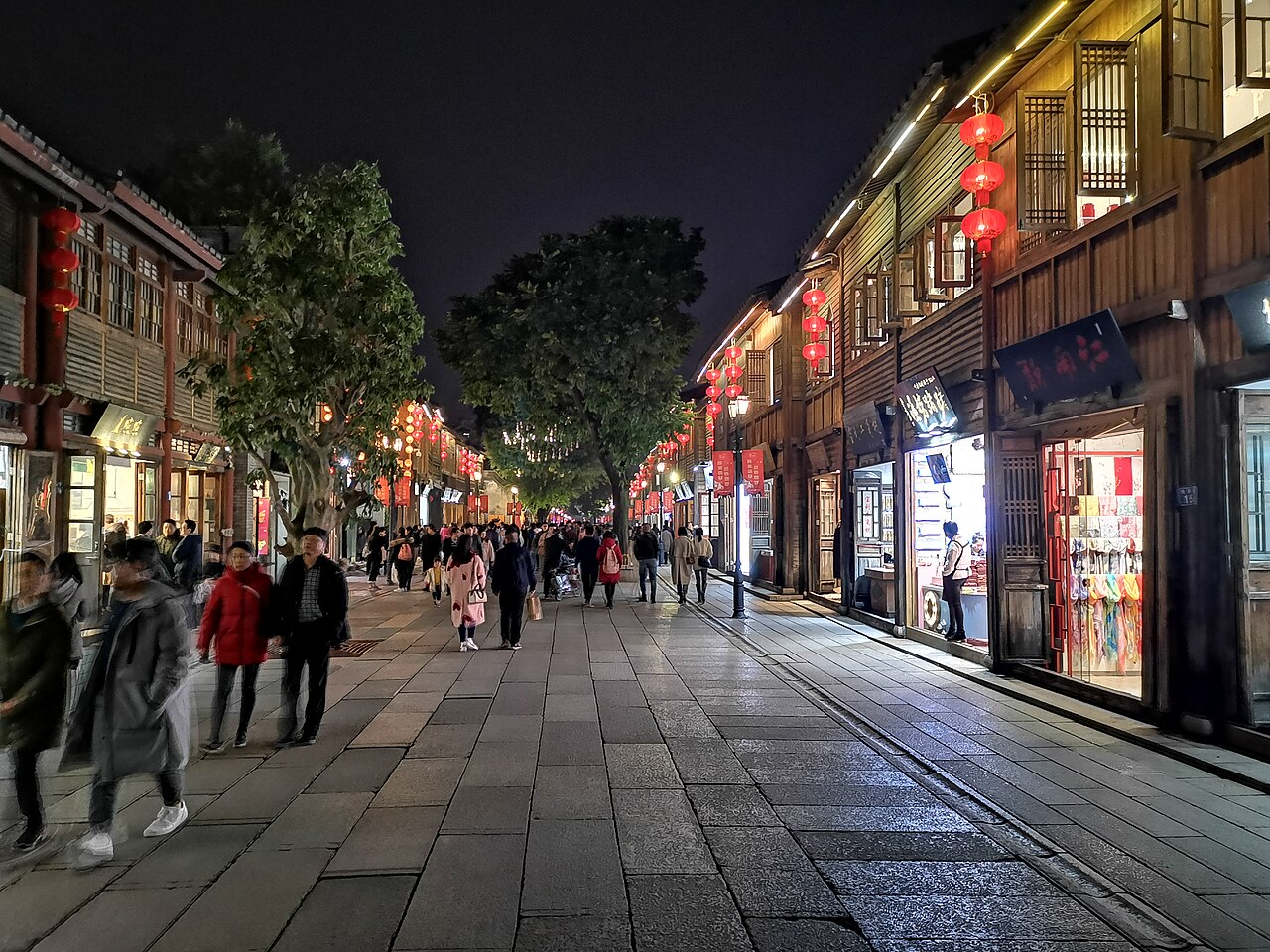
Near West Street, 西街, and the old core, prioritise short outings, meals and a temple visit. Inspect noise, stairs and legal car pickup; a lane address may involve a luggage walk.
A Fengze hotel offers a different room or road-access choice with a transfer to the core. An airport-area Jinjiang property suits an early flight but is a different decision from staying near Kaiyuan Temple.
Confirm original-passport check-in and registration for every guest. For an apartment, agree host assistance before arrival; a platform order is not the required registration record.
Use the old-city shuttle within its actual area
Quanzhou’s transport authority describes a walking-and-bus system that includes regular buses, smaller services and the old-city electric vehicles known as xiaobai, 小白. A May 2026 public-security response says their operating scope is the old core. Do not expect an old-city shuttle to take you to every railway station, airport or coastal town.
For a short ride, ask the driver about the destination, fare, available seat and current payment method before boarding. Older municipal material documents cash and local payment options, but this research did not establish universal direct foreign-bank-card acceptance or passport activation for every current code. Keep small cash and another route.
A local transport QR code is different from an ordinary merchant payment code. If a code fails, ask about the exact vehicle’s cash requirement or use a licensed taxi. A holiday announcement of free travel or extended service is not a normal-year promise. For app cars, meet at a lawful road point rather than blocking a narrow lane.
Choose a few connected sites rather than every heritage component
UNESCO’s Quanzhou serial property describes a Song–Yuan maritime trading system with religious buildings, bridges, docks and production remains. These elements are distributed across the wider region. World Heritage status does not make every component adjacent or give one ticket admission to all of them.
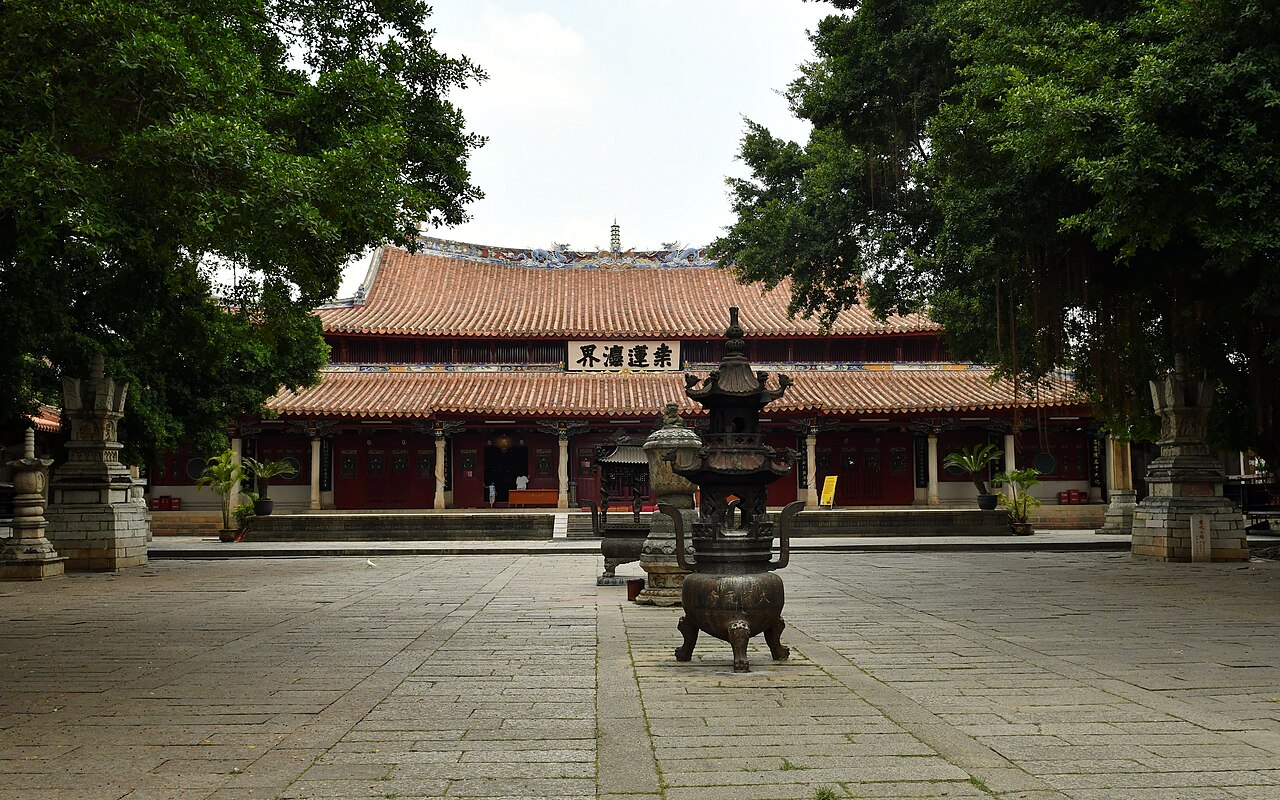
Begin with Kaiyuan Temple, 开元寺, and a selected West Street walk. A 2024 municipal tourism answer says the temple did not require advance reservation; recheck current holiday and crowd notices rather than treating that older answer as permanent. The temple grounds, a separately managed display and a commercial guided walk can have different arrangements.
Qingjing Mosque, 清净寺, provides a different religious and architectural context. Check the current visitor entrance, dress and permitted photography with staff. Follow the visitor route, give worshippers space and ask before photographing people. Do not infer that every prayer area is public because a heritage listing describes the building.
For another outing, choose an individual bridge, rock-carving or other site whose location interests you, then confirm admission and transport. Luoyang Bridge, 洛阳桥, is in the Quanzhou region; it should not be confused with the city of Luoyang in Henan. An outlying component can replace a half-day, not merely fill a gap between two old-city snacks.
Check the Maritime Museum branch before travelling
The Maritime Museum’s Donghu location, 泉州海外交通史博物馆东湖馆区, and the ancient-ship display inside Kaiyuan Temple are different visits. An October 2026 museum announcement, distributed through Quanzhou’s official publishing service, says Donghu closed from 12 October for improvement work. Its expected mid-November return is not a confirmed reopening.
As of this guide’s 7 November check, do not make the Donghu building your guaranteed rainy-day anchor. Look for a subsequent operator reopening notice before setting off. The same announcement distinguishes the Kaiyuan ancient-ship display and its own closing days; temple access does not establish that display’s availability.
For either museum visit, ask the named institution about the current passport-verification or reservation route. Carry the original document and use official assistance if the form rejects it. A guide-service purchase or a general old museum listing does not itself secure admission.
Use mianxianhu as a lesson in asking about the base
Mianxianhu, 面线糊, miànxiànhú, is a local fine-noodle soup with optional additions. Municipal food material describes meat stock and seafood ingredients. Omitting visible meat does not change the broth.
Ask about broth, toppings, fat and sauces. State allergies, religious exclusions or vegetarian needs explicitly. If preparation cannot be confirmed, choose another meal.
Order modestly and check topping quantities and prices. A busy heritage street does not guarantee common recipes or payment methods across vendors.
Give the central city two days, with one optional extension
Day one: visit Kaiyuan Temple on a confirmed operating day, walk a compact West Street section and eat nearby. Add a second religious site only if time and visitor arrangements fit.
Day two: choose a confirmed museum or one heritage component outside the core. If Donghu remains closed, use another open cultural site or a shorter neighbourhood outing.
Day three: explore a specific nearby city or coast destination with its own return, or preserve time before departure. Jinjiang and Shishi merit separate plans; a broad Quanzhou hotel label does not make them central walking stops.
Keep an adaptable walking and return plan
Heat, heavy rain and typhoon warnings can make exposed bridges, coast visits and transport less practical. Check current local forecasts and official operator notices. A dry spell at your hotel does not prove that an outlying attraction or road is operating normally.
For reduced mobility, ask about the whole route: station exit, car drop-off, lane paving, temple threshold, toilet and return. Old-city vehicles are not a guarantee of wheelchair boarding or door-to-door access at every site. Historic stone, steps and crowded lanes can require a shorter route.
Keep a proper rest stop and an accessible road meeting point. A child’s stroller, a mobility aid and the person using it have different handling needs; describe the actual requirement to the operator. No continuous step-free city or religious-site route was audited for this guide.
Choose the station that fits the complete next journey
Fuzhou and Xiamen are useful onward cities. Search current trains on 12306, read both full station names and compare the two hotel transfers. A ticket for Quanzhou South or East should not be shown to a driver simply as Quanzhou station.
For an airport departure, allow the actual central-city-to-Jinjiang connection and current terminal procedures. Keep sightseeing flexible until the departure margin is secure. Passenger ferries or offshore excursions require a separately verified service, destination and admission basis; a port name on a regional map is not proof of an available visitor sailing.
Places in pictures
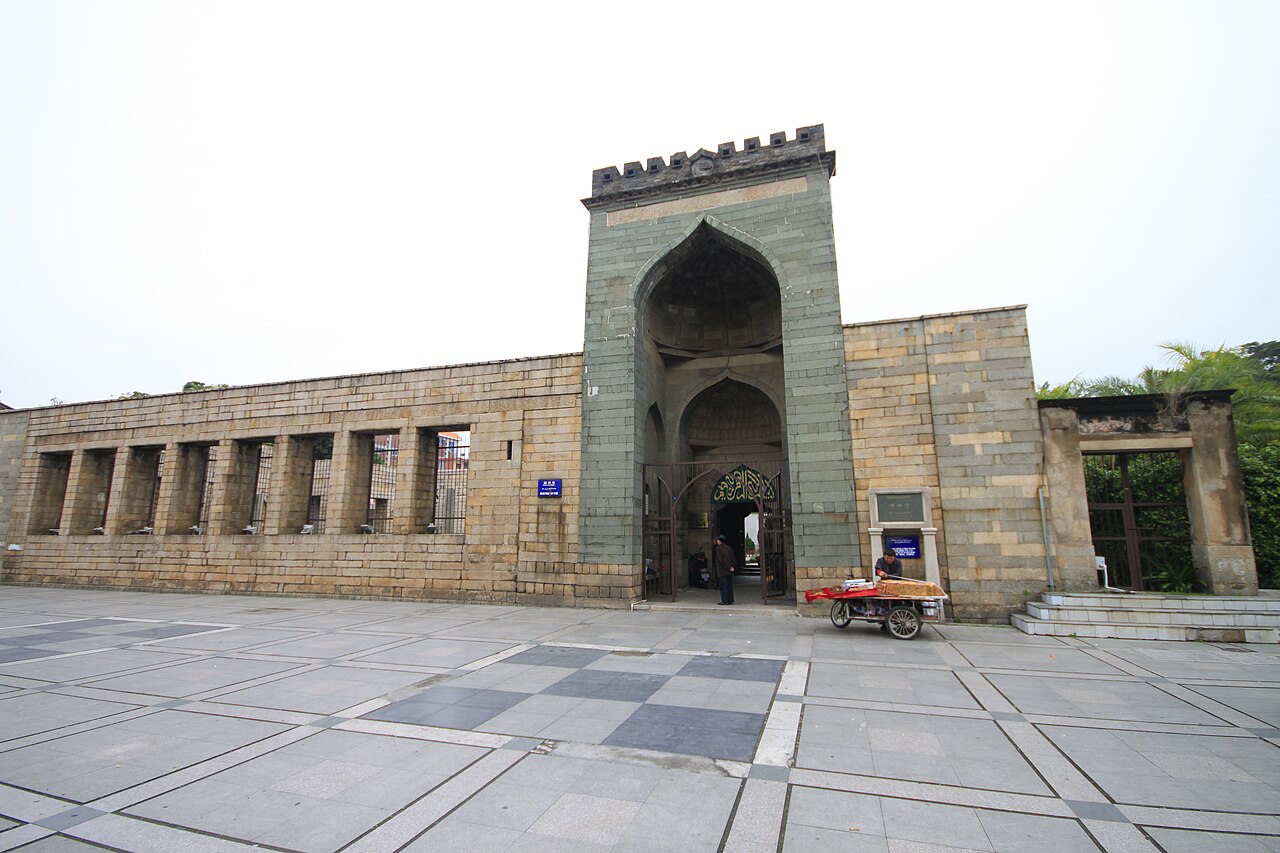
Common questions
Is Quanzhou Jinjiang Airport beside the old city?
It serves the region from Jinjiang. Compare the actual ground transfer; a hotel near the airport is not automatically near the historic core.
Are Jinjiang and Shishi the same city-guide area as central Quanzhou?
They are distinct county-level cities within the wider prefecture. This guide’s compact itinerary centres on Licheng and nearby Fengze.
Does the World Heritage listing provide one admission product?
No. Its serial components have different locations, managers and visitor arrangements. Check each chosen site.
Sources & checking notes
- Quanzhou municipal government — districts and separate county-level cities
- Quanzhou transport authority — airport and railway-to-core connections, May 2026
- Fujian transport authority — Quanzhou South in Jinjiang and distinct East/South transfers
- Quanzhou Public Security Bureau — xiaobai operating-area limitation, May 2026
- Quanzhou transport authority — walking, regular buses and old-city vehicles
- Quanzhou municipal tourism answer — Kaiyuan Temple reservation baseline
- UNESCO — Quanzhou serial maritime-trade heritage property
- Quanzhou Publishing / Maritime Museum — Donghu closure notice, October 2026, syndicated announcement
- Quanzhou municipal food portal — mianxianhu ingredients and preparation
- Quanzhou municipal government — older documented xiaobai payment options
- China Railway — actual dated trains and stations
Sources checked on 7 November 2026. Workflows, routes and troubleshooting suggestions are editorial guidance. Fees, eligibility, reservations and local services can change; follow the official links before relying on a rule.
Original synthesis of public information and editorial planning advice. We have not performed a live account, payment or on-site test of every workflow. This guide does not claim a firsthand visit or professional accreditation.