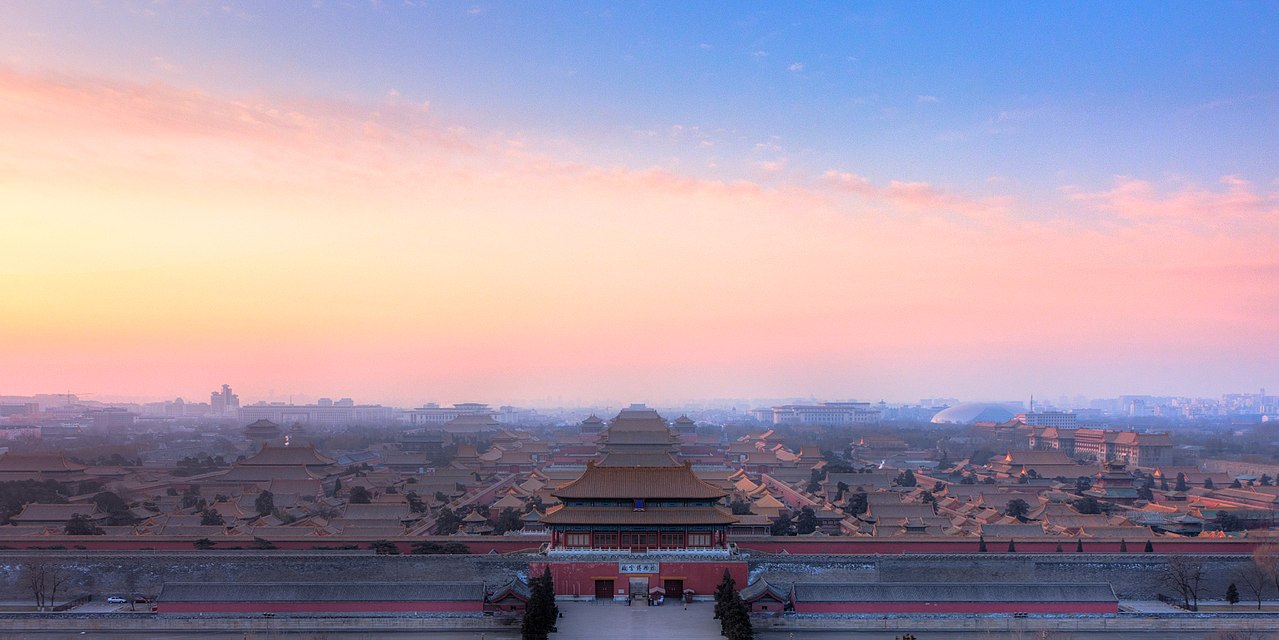

The Forbidden City rewards more than a walk from one famous throne to the next. Its courts, gateways and side buildings describe how authority was organised, while the museum's collections reveal lives and skills beyond the ceremonial axis. This original visit plan combines official booking instructions with architectural reading; it does not claim a tested passport account or an inspected accessible route.
Before you start
- A successful date-specific order covering each visitor and any separately reserved exhibition.
- The original passport entered in the reservation.
- A south-side entrance approach and a different exit pickup plan.
- One or two cultural interests, plus water, comfortable shoes and weather protection.
Step by step
- 01
Obtain a usable order
Use the museum's current official channel, check every visitor and optional exhibition, and save the successful result.
CHECK BEFORE CONTINUINGYour date, passport and admission product match.
- 02
Plan the correct approach
Set 午门 as the entrance and check any independent nearby reservation before choosing the walking route.
CHECK BEFORE CONTINUINGYou reach the intended check-in without relying on a northern exit or unrelated ticket.
- 03
Choose one deeper interest
Use the live museum map and exhibition notice to add one feasible gallery to the main route.
CHECK BEFORE CONTINUINGThe visit includes sustained looking as well as the major courts.
If it does not work
The desired day is sold out.
Check the official channel's documented alternatives or another date.
Another way forward: Choose another cultural outing; a guide booking alone does not establish museum admission.
My passport is rejected by a scanner.
Show the original document and successful order to museum staff.
Another way forward: Follow its assisted verification process rather than attempting another visitor's code.
A gallery or courtyard is closed.
Follow the current barrier and official notice.
Another way forward: Use another open area without treating the published site map as a guarantee of universal access.
Confirm the actual admission before planning the day
The current official ticket rules accept passports for non-mainland visitors and open advance sales seven days before the visit at 20:00 Beijing time. The museum does not sell same-day tickets. These are the rules checked on November 7, 2026; consult the current notice again when booking. A saved visitor profile or money leaving a bank account is not a successful admission order.
Use the museum-linked official channel and read the selected date, visitor names and inclusions. Treasure Gallery, Clock Gallery and particular exhibitions can have separate ticket or reservation requirements. Do not assume an expensive guided package creates space after the museum's quota is exhausted. If the form rejects your passport, ask the museum's published ticket support before travelling.
The international visitor page confirms the normal Monday closure with national-holiday exceptions and possible special closures. A Monday that happens to fall during a trip is not automatically open. Check the actual date rather than extrapolating from a previous holiday.
Approach the only entrance and keep nearby reservations separate
The Meridian Gate 午门 is the entrance; Shenwumen 神武门 to the north and Donghuamen 东华门 to the east are exits under the museum's published routing. A car dropping you beside the northern gate has not delivered you to admission. Save the correct gate in Chinese and allow for the final walking and security approach.
The ticket instructions distinguish a Palace-only approach along the eastern or western moat-side roads from a route through Tian'anmen Square. If you also want the square, verify its independent reservation and access. Tian'anmen Gate Tower is another separate visit. Do not let a familiar postcard composition persuade you these places share one ticket.
The Tian'anmen authority's measures list a valid Palace Museum reservation among records that can exempt visitors from a separate Square reservation. Its foreign-visitor guidance describes same-day morning and afternoon access with an eligible record. Show the valid confirmation for verification and check current controls; do not assume this covers flag-raising or the Gate Tower. A Square reservation does not replace Palace admission.
Bring the original document used in the order. If automatic verification fails, show it and the successful booking to staff. A document photo can help explain the problem but should not be treated as an authorised substitute. Check the published cancellation and no-show terms before changing plans.
Read the outer courts as ceremonial space
Begin beyond the Meridian Gate by noticing the sequence of thresholds and open courts. Before approaching a building, look at the distance separating it from the gate, the raised platform and the way side structures frame the view. This is an editorial looking exercise: the empty space is part of the architecture, not merely a queueing area between attractions.
The museum's Hall of Supreme Harmony account describes a hall used for major ceremonies and a building repeatedly rebuilt after fires. The visible structure should not be imagined as every timber surviving unchanged since the first Ming construction. Compare its roof, terrace and prominence with the smaller Hall of Central Harmony behind it.
At the Hall of Preserving Harmony, the museum records changing uses, including Qing banquets and palace examinations. Similar roof colours do not imply identical functions. Instead of memorising every measurement, ask what kind of event each space enabled and who could approach it.
Treat the inner court as a changing political household
Beyond Qianqingmen 乾清门, the scale and rhythm change. The museum's gate history describes a connection between outer and inner courts that also became a place for handling government affairs. A gateway could do political work; it was more than a door.
The Palace of Heavenly Purity 乾清宫 likewise changed function. After the Yongzheng emperor moved his residence elsewhere, it served audiences and state business as well as ceremonial occasions. The simple label 'public front, private back' is a useful starting diagram but misses this overlap.
Slow down at one courtyard edge and compare a central view with a side view. Look for how corridors connect rooms, how thresholds control movement and how the buildings create shade. Stay behind barriers: the wish to see a detail does not justify touching, climbing or leaning on historic surfaces.
Add one area of depth instead of every optional stop
UNESCO's palace record treats the site as a broad ensemble of buildings, gardens and collections. For a first visit, keep the main axis as the organising line, then choose one confirmed gallery or side area linked to an interest such as ceramics, clocks, craftsmanship or court life.
Check its actual location and entry requirement before setting out. A special exhibition can involve another reservation and a queue; a gallery title in an old travel article does not establish today's display. Read a few labels carefully rather than collecting photographs from every room. Leave a side area out if it jeopardises the admission slot or makes the route exhausting.
Use a flexible route and a deliberate finish
A useful first-visit sequence is Meridian Gate, the main outer courts, the transition at Qianqingmen, selected inner-court spaces and the northern garden area, with the chosen gallery inserted only where the map and booking fit. This is an original editorial framework, not a promise that every building interior is open.
Take a seated break before fatigue determines the rest of the day. Summer courts can be hot; winter wind and wet or icy stone change the experience. Ask visitor services about the precise accessible route and toilets you need: a ramp at one entrance does not establish access to every platform.
Choose the exit according to the route actually completed. Jingshan 景山 is a separate park visit after a northern exit, with a climb if you want the hilltop view; it is optional. An unhurried meal can be a better finish than another large fixed-slot attraction. Meet a car at a lawful road pickup, not at an imaginary vehicle entrance inside the palace.
Common questions
Can I arrive without a reservation and buy at the gate?
The museum states that it does not sell same-day tickets. Arrange valid admission in advance.
Does the Palace Museum ticket include Tian'anmen Square?
Do not assume that. Check each place's independent reservation and access arrangements.
Is Monday always closed?
Monday is the normal closure, with national-holiday and special-notice exceptions. Verify your exact date.
Sources & checking notes
- Palace Museum: current passport, ticket, gate and cancellation rules
- Palace Museum international visitor page: advance booking and closures
- Palace Museum: Hall of Supreme Harmony architectural history
- Palace Museum: Hall of Preserving Harmony and changing uses
- Palace Museum: Gate of Heavenly Purity
- Palace Museum: Palace of Heavenly Purity
- UNESCO: Imperial Palaces of the Ming and Qing Dynasties
- Tiananmen Area authority: Square visiting measures; qualifying reservation exemption, checked November 2026
- Tiananmen Area authority: foreign-visitor guidance, May 2025; same-day morning/afternoon exemption
Sources checked on 7 November 2026. Workflows, routes and troubleshooting suggestions are editorial guidance. Fees, eligibility, reservations and local services can change; follow the official links before relying on a rule.
Original synthesis of public information and editorial planning advice. We have not performed a live account, payment or on-site test of every workflow. This guide does not claim a firsthand visit or professional accreditation.