A ceramics gallery becomes easier to enjoy when you stop trying to recognise every dynasty at once. Begin with the shape of an object, then its surface, its use and the journeys it may have made. A small group of carefully observed pieces can tell a richer story than a fast walk past hundreds of labels.
Choose the museum branch before choosing the object
For Shanghai, begin with Shanghai Museum East. Checked on 7 November 2026, the museum's own permanent-gallery list locates the Ancient Chinese Ceramics Gallery there. Its People's Square visitor page directs visitors seeking permanent displays to the East branch during the stated special-exhibition arrangement. Check the current museum notices before travelling rather than relying on an old guide to a different building. Official gallery list · People's Square visitor notice
Then separate three kinds of information: a collection record says the museum holds an object, an exhibition page describes a particular display, and a visitor notice explains access. None automatically substitutes for the others. Even a famous object illustrated online may not be in the gallery on your day.
Save the branch name and address from current official visitor information and check any reservation, document or gallery-access requirement. Do not make a tight intercity connection depend on seeing one unconfirmed work. This guide provides a looking method, not a promise that a named piece will be on view.
Look at the silhouette before reading the decoration
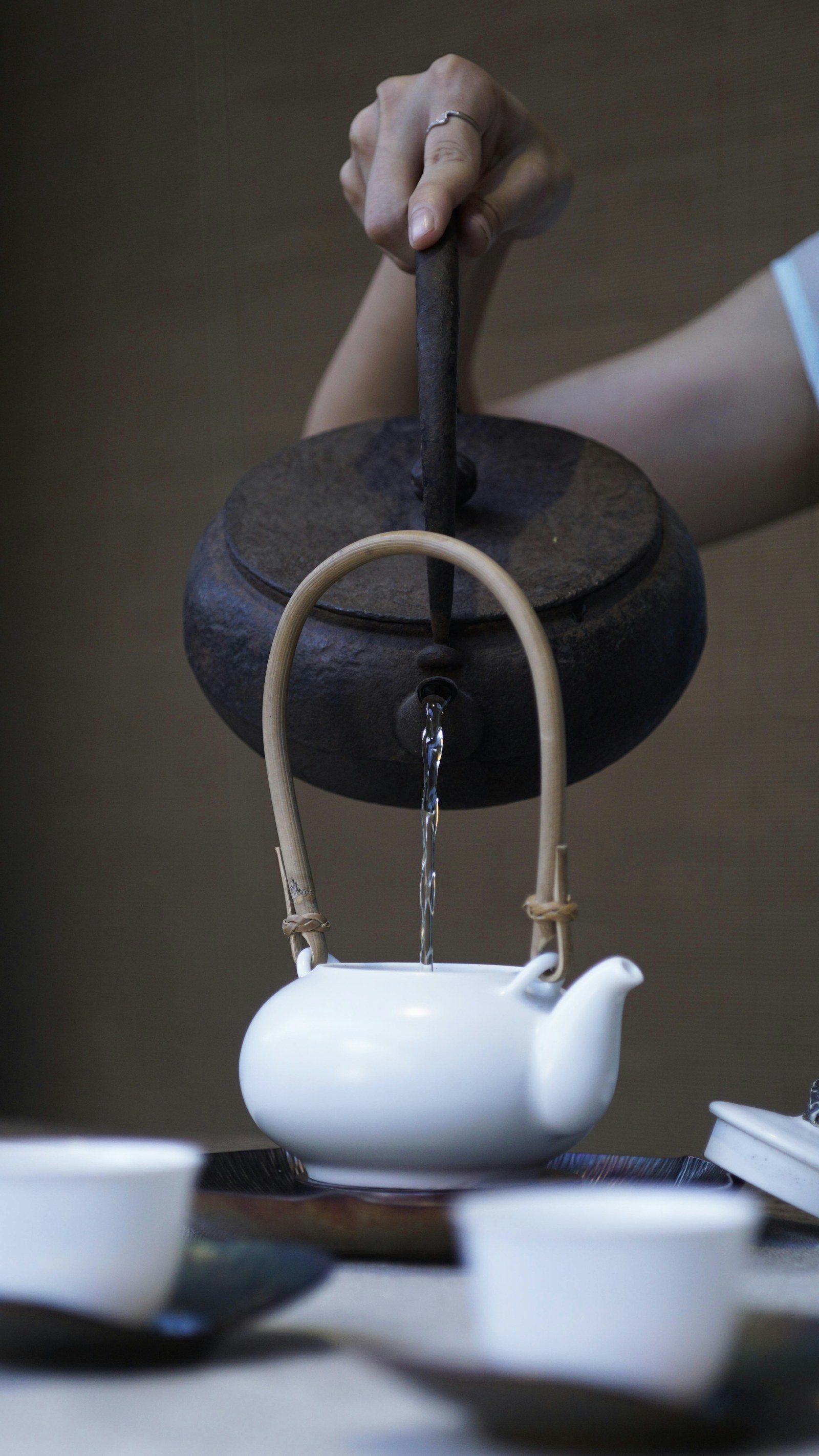
Choose one object and look at its outline. Where is it widest? How do neck, shoulder, body and foot relate? Does a handle suggest a way of lifting or pouring? You can investigate these questions without touching the object or knowing a technical vocabulary.
Then read the label's identification. A bowl, vessel, figure or architectural component raises different questions. Consider whether the form seems suited to handling, display or another use, but let the museum's explanation correct your first impression. An unfamiliar shape is not necessarily a decorative version of something you know.
The Met's introduction to Chinese ceramics emphasises the range of vessels and sculptures and their domestic, funerary, religious and social meanings. This encourages looking beyond fine tableware to the different roles ceramics have played. Met: How to Read Chinese Ceramics
Read the body and the surface as separate clues
Look at what the label calls the material: earthenware, stoneware or porcelain, and any description of glaze, pigment or enamel. You do not need firing temperatures to begin. Notice which effects belong to the object's shape and which are created by a coating, colour or painted design.
Compare two nearby pieces if the display permits. One may draw attention through a quiet surface and the way light meets its curve; another through an image or a densely arranged pattern. Neither requires a ranking in which more decoration means greater skill or value.
Ask how decoration meets the form. Does a band emphasise a shoulder or rim? Does an image wrap around a vessel so that you cannot see it all at once? Observe from permitted viewpoints without leaning over barriers, using flash or trying to move the case or object.
Use blue-and-white as one example, not the whole tradition
The V&A explains blue-and-white ceramics through cobalt-blue decoration on a white body, commonly painted under the glaze. Its account also traces circulation and reinterpretation across different markets. This gives a concrete way to connect material, painting and exchange without treating blue-and-white as the only important Chinese ceramic category. V&A blue-and-white introduction
In the gallery, compare how blue is used: outline, shading, a repeated border or a larger pictorial field. Notice the white spaces too. They participate in the design rather than merely marking areas a painter left unfinished.
Keep place, period and material distinct. Similar colours do not establish the same kiln, date or intended market. Use the label's attribution, and retain any words indicating uncertainty. A visitor guide cannot authenticate an object or replace a curator's technical research.
Ask where the object belonged
Read for original use and context. Was the piece made for a tomb, a household, a religious setting, a collector or an overseas buyer? If the interpretation does not answer, keep the question open. A beautiful gallery arrangement can hide the very different circumstances in which objects were first used.
The V&A's examples show how export markets and exchanges influenced blue-and-white shapes and decoration. Use this to ask who was expected to recognise a motif or use a particular vessel. Movement across borders is part of the story, not an interruption to an otherwise sealed national tradition.
Compare the date of manufacture with later additions, collecting history or donation information when the label provides them. These are separate stages in an object's life. A modern donor's name does not describe the original owner, and a later mounting need not share the ceramic body's place of manufacture.
Build a visit around three objects
Choose three contrasting objects: perhaps one for its shape, one for a surface effect and one for a story of use or exchange. Record the museum, title, date or date range and accession number where available. A permitted photograph of the label can help you find the authoritative record afterwards.
Use the collection page for follow-up, keeping display status separate. Museum collection websites and catalogues are valuable even when a work is in storage or on loan. Do not describe an illustrated catalogue selection as something you personally saw.
Before leaving, ask which observation changed after reading a label. That is a useful measure of the visit: you have connected looking with evidence. Leave time to sit and review those few pieces instead of trying to finish an entire ceramic history in one afternoon.
Common questions
Does an online collection record mean an object is on display?
No. Check the current exhibition, gallery or museum response. Collection ownership and display availability are separate facts.
Which Shanghai Museum branch should I research for Chinese ceramics?
The official gallery list checked on 7 November 2026 places the Ancient Chinese Ceramics Gallery at Shanghai Museum East. Recheck current notices and the precise branch before visiting.
Do I need to memorise dynasties to enjoy the gallery?
No. Begin with form, surface and use, then add the date and context from the label. A few carefully studied objects are a worthwhile first visit.
Sources & checking notes
- Shanghai Museum: current permanent-gallery list
- Shanghai Museum: People's Square visitor notice
- Metropolitan Museum of Art: How to Read Chinese Ceramics
- Victoria and Albert Museum: Chinese blue-and-white ceramics
Sources checked on 7 November 2026. Workflows, routes and troubleshooting suggestions are editorial guidance. Fees, eligibility, reservations and local services can change; follow the official links before relying on a rule.
Original synthesis of public information and editorial planning advice. We have not performed a live account, payment or on-site test of every workflow. This guide does not claim a firsthand visit or professional accreditation.