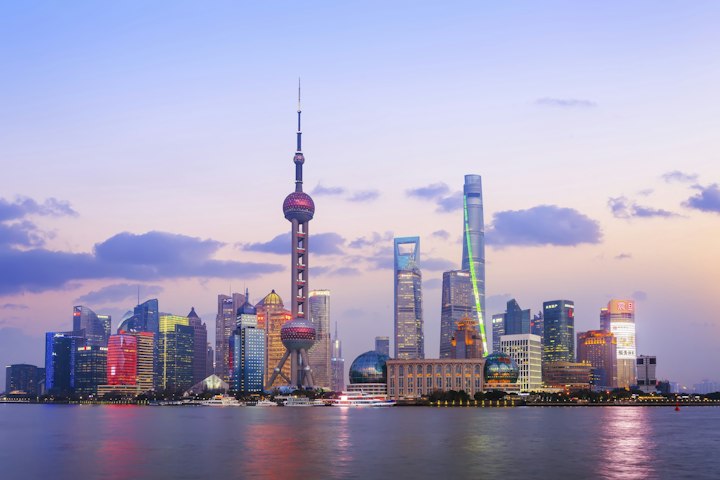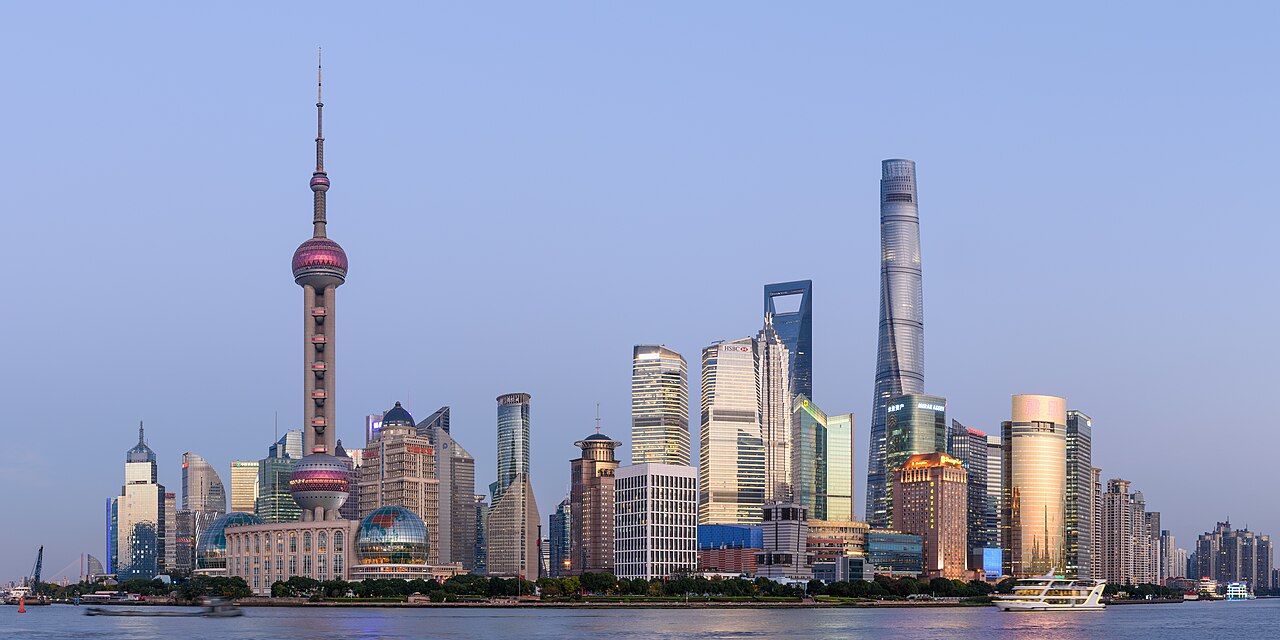
The Bund is rewarding because buildings designed for different institutions now sit within a busy working city. A broad river view reveals their collective rhythm; a closer look reveals entrances, surfaces and changes of use. This original editorial walk uses Shanghai heritage and tourism information plus the Peace Hotel operator's current material, read on 7 November 2026. It does not claim a firsthand architectural survey, a guided-tour booking or access to private rooms.
Begin by choosing the view you want
From the waterfront promenade, look back toward the historic building line before focusing on Pudong's towers. Notice the way separate facades form one frontage: lower horizontal bands, repeated windows, occasional domes and taller roof features. Then choose only a few buildings to examine more closely. You do not need to attach a style label to every ornament to enjoy the architecture.
The road separates the riverside overview from the building-side pavement. Use signed crossings and keep the sequence flexible instead of repeatedly crossing for each photograph. Nanjing East Road, 南京东路, is a useful meeting reference, but a metro station exit and the riverfront are different points. Save a specific meeting location if your group might separate.
Start with the southern buildings: scale and entrances
Around No 1 and No 3 The Bund, begin with the relationship between entrance, middle floors and roofline. Shanghai's municipal architecture guide documents the atrium at No 1 and the three-part facade and gallery use at No 3. Use those documented features as questions for the walk: how is an entrance emphasized, and how does the facade organize a large building into readable sections?
Their current exhibitions and commercial interiors are separate visits. A published photograph of a dome or an art gallery does not mean you may enter every floor at any time. If an interior matters to you, check the current host's opening notice, exhibition ticket and entrance before arriving. The exterior route still works when an indoor visit is unavailable.
At No 12, compare institutional architecture with ordinary street life
No 12 The Bund is identified in Shanghai's official guide as a bank building with a neoclassical composition and an elaborate domed hall. From outside, examine how the large entrance and repeated vertical elements create a sense of permanence. Compare that deliberate formality with the smaller signs, doors and daily activity at pavement level.
The documented interior includes mosaics and marble columns, but a visitor's interest in those features does not override a working building's security or service arrangements. Ask whether an architectural visit is permitted and where to wait. Do not enter staff areas, photograph sensitive operations or assume a banking entrance is an unrestricted museum entrance. Keep a useful exterior stop as the default.
At Nanjing East Road, distinguish the Peace Hotel buildings
The Sassoon House associated with the north Peace Hotel building is described in the municipal guide as Art Deco. The operating Fairmont Peace Hotel identifies its address as 20 Nanjing Road East and documents the former Cathay Hotel's history. At this point, shift attention from broad symmetry to the entrance geometry, vertical emphasis and the relationship between a landmark hotel and its street corner.
The Fairmont's own website describes dining, music and a Peace Museum experience. Those are operator-managed activities with their own arrangements, rather than automatic inclusions in a public waterfront walk. Ask about the visit you actually want, including visitor eligibility and booking conditions; do not infer universal free access from a room package or a promotional description.
The Swatch Art Peace Hotel is a distinct institution associated with artist residency and cultural activity, as described by the municipality's October 2026 report. Similar English names can lead to the wrong meeting place. Use the exact institution and Chinese address when arranging an appointment, rather than asking only for 'the Peace Hotel'.
Choose a short finish or continue toward Suzhou Creek
Nanjing East Road makes a practical place to finish the main building sequence and find a meal or return transport. If everyone still wants to walk, continue north toward Suzhou Creek and the Waibaidu Bridge area, 外白渡桥. The city's heritage description treats the creek bridges as part of the wider historic setting. Observe how the riverfront changes as it meets another waterway.
Do not turn that extension into an obligation to cross every bridge or reach the North Bund. A bridge, a riverfront viewing point and a museum are separate destinations with different routes. Pick one clear stopping point, identify the way back and shorten the walk when weather or crowd management makes the next segment unattractive.
Read historic uses without reducing the district to a slogan
The Bund's financial and commercial history helps explain its monumental institutional buildings, but its appearance is not a complete history of Shanghai. Buildings changed occupants and functions, and the surrounding streets connect to other histories of work, migration, trade and everyday life. Read a reliable institutional history for a building that particularly interests you, rather than assuming its current sign explains its origin.
For a closer exercise, select one facade and compare its lowest floor with its upper levels. Ask which details guide a visitor toward an entrance, which repeat to create order and which distinguish the roof. Take a second wider view after the close observation. This gives the walk a purpose beyond collecting a distant skyline photograph.
Keep the walk usable in rain, crowds or limited mobility
Check the current forecast and official access notices. Exposed riverfront walking is not a dependable shelter plan in a storm, and decorative lighting or evening crowd arrangements are not guaranteed performances. For ordinary rain, reduce the exterior sequence and use a separately confirmed indoor visit; for severe weather, follow closures and transport advice rather than trying to complete the route.
A waterfront promenade does not establish that every approach, crossing or historic entrance is step-free. Identify a practical level route and an exit point before setting out with a wheelchair, stroller or heavy bag. Avoid blocking entrances, narrow pavements and other visitors' photographs. Stop at a safe place to read notes rather than walking backward into traffic for a wider frame.
Common questions
Do I need a paid tour to enjoy the Bund?
No tour is required for this editorial exterior-reading route. A knowledgeable guide or confirmed interior visit can add context, but assess its content and access separately rather than assuming a booking opens every building.
Can I enter the banks and hotels to see their ceilings?
Only under the current institution's visitor arrangements. A tourism feature documenting an interior is not a permanent access permit. Ask about the actual entrance, opening and any reservation.
Is the Swatch Art Peace Hotel the Fairmont Peace Hotel?
They are distinct institutions. Use the complete name and address for a meeting or booked experience, especially around the Nanjing East Road corner.
Should I save the walk for night?
Daylight helps with facade detail; evening changes the riverfront atmosphere. Choose according to your interests and the weather. Do not build an important connection around an assumed light-show schedule.
Sources & checking notes
- Shanghai Government / Huangpu heritage information — Bund block and Suzhou Creek bridges, September 2025 update
- Shanghai Municipal Culture and Tourism / Huangpu — documented Bund buildings and interiors, March 2026
- Fairmont Peace Hotel — current institution, location and managed heritage experiences
- Shanghai Government / Huangpu — Swatch Art Peace Hotel's artist-residency context, October 2026
Sources checked on 7 November 2026. Workflows, routes and troubleshooting suggestions are editorial guidance. Fees, eligibility, reservations and local services can change; follow the official links before relying on a rule.
Original synthesis of public information and editorial planning advice. We have not performed a live account, payment or on-site test of every workflow. This guide does not claim a firsthand visit or professional accreditation.