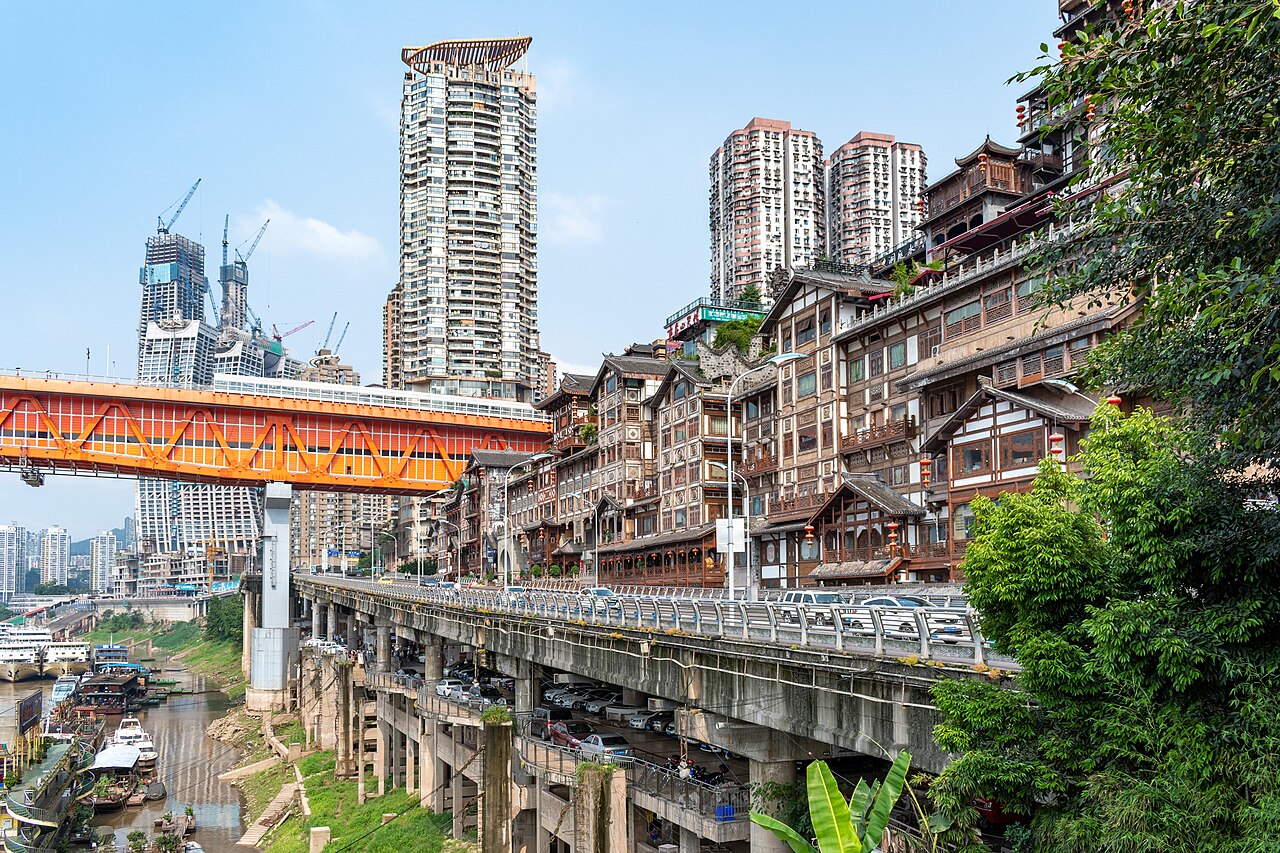

Chongqing's appeal is also its main planning challenge: streets, bridges, stations and building entrances occupy different levels. A direct line on a map may be a poor walking route. This guide uses official transport and museum notices to build a flexible first visit, with original editorial advice on grouping sights and managing hills. It is not a firsthand journey report. Checks were made on 6 November 2026, including newer airport and railway changes that make older arrival instructions unreliable.
Before you start
- Your original passport and issued rail or flight booking details.
- The hotel's full Chinese name, entrance level and reachable taxi drop-off saved offline.
- A current metro route, with the lift exit identified when needed.
- Small RMB notes, a payment backup and a charged phone.
- Shoes suitable for wet steps, plus a plan for an indoor rest period.
Step by step
- 01
Confirm the arrival name and level
Read the full station or flight terminal, then obtain the hotel's Chinese entrance and legal vehicle drop-off.
CHECK BEFORE CONTINUINGYou can identify both ends of the journey without relying on an English district name.
- 02
Choose a payment route before the gate
Use a confirmed active transit code or buy a physical ticket at the service window. Ask about overseas-card POS purchase; retain cash as a backup.
CHECK BEFORE CONTINUINGYou have a valid ticket or credential for both entry and exit.
- 03
Check the walking elevation
Ask for the lift exit and inspect the road-level connection before walking toward a riverside building.
CHECK BEFORE CONTINUINGThe route reaches the intended entrance without an unexpected stair-only shortcut.
If it does not work
The navigation pin is close, but the hotel is above or below me.
Stop and ask the property for the entrance road, floor and accessible approach.
Another way forward: Take a short licensed taxi journey to the named road entrance rather than carrying luggage over uncertain stairs.
My overseas card will not open the metro gate.
Go to the staffed window and ask to buy a ticket through its POS terminal; counter purchase and gate tap are separate.
Another way forward: Buy with RMB cash or use a licensed taxi if the rail journey is no longer practical.
I was sent to the wrong railway station.
Show the complete Chinese station name on the issued ticket and ask staff to confirm the fastest practical correction.
Another way forward: Use the official railway change process if you can no longer reach your booked service; a ticket for one station is not valid at another by assumption.
Words that help
Show the Chinese text when speaking is difficult. Copying happens on your device.
酒店入口在几层?
Which floor is the hotel entrance on?
请走不用爬楼梯的路线。
Please use a route without stairs.
请帮我确认是重庆东站。
Please help me confirm that it is Chongqing East Station.
Arrive through the current Jiangbei terminal
The principal airport for this city itinerary is Chongqing Jiangbei International Airport, 重庆江北国际机场 (CKG). A municipal notice quoting the airport states that, after the remaining airlines moved on 23 December 2025, domestic and international passenger flights operated from T3. Do not follow an old airline list directing you automatically to T2. Recheck the terminal for your actual flight; airport operations can change again.
Follow current signs for Line 10, the official taxi rank or the designated ride-hailing area. The same notice identifies Line 10 as a connection between terminals and publishes airport help at 023-966666. A metro journey can avoid road congestion but may involve a transfer and a steep final walk. A car can be preferable with heavy bags or a late arrival; ask the hotel for the correct road-level entrance before setting the destination. Do not select a pickup point on another floor because it looks close on the map.
Read the full railway station name
Chongqing North, 重庆北站, Chongqing West, 重庆西站, Shapingba, 沙坪坝站, and Chongqing East, 重庆东站, are separate arrivals. Chongqing East opened in June 2025 in the Chayuan area of Nan'an; the municipal state-assets authority's rail announcement documents the new hub. An old guide listing only North and West is incomplete.
Search the actual travel date on official 12306, then compare the station-to-hotel journey. East may be correct for a particular train even when your hotel is far from it. Follow the current metro interchange signage or the official taxi queue rather than assuming every station connects to your district by the same line. For departure, show the driver the complete Chinese station on the issued ticket and confirm the entrance or station square.
Compare Jiefangbei, Guanyinqiao and Nanbin Road
Jiefangbei, 解放碑, in Yuzhong suits a first visit to the central peninsula, evening food and the river-view district. Its convenience depends on the precise building: an advertised short walk may include stairs, road underpasses or an entrance several levels above the riverside. Ask which metro exit and street entrance work with luggage, and check noise around busy visitor streets.
Guanyinqiao, 观音桥, in Jiangbei gives a lively modern shopping and dining base on the north side of the river. It suits travellers who prefer a broader city-neighbourhood stay and accept a metro trip to the peninsula. Nanbin Road, 南滨路, on the south bank prioritises riverfront views and a different skyline perspective. It adds cross-river journeys and can leave a climb between a riverside hotel and rail access. View orientation, lift access and a usable pickup point matter more than a district-wide promise of convenience.
Buy a metro ticket without confusing counter cards with gate taps
An August 2024 municipal payment notice documents overseas bank-card ticket purchases at staffed metro windows, covering the network then operating. Visa, Mastercard and other listed brands were accepted through POS terminals. This is evidence for buying a ticket at a counter, not universal direct overseas-card gate entry. Ask staff about the current station's equipment and your actual card if a machine rejects it.
For a short visit, a cash single ticket is a useful fallback. A January 2025 operator notice republished by the municipality also describes physical day-pass products and their purchase methods, with a stated exclusion for the Bitong line. Compare a pass with your likely journeys and current rules; this guide does not quote a live fare or assume every product covers every service.
For QR travel, open the relevant Chongqing transit service, finish its required verification and use an active transport credential. A wallet's ordinary payment code is different. Keep the same ticket or credential for both entry and exit; seek the service window for an incomplete journey. If you need a lift or a wide gate, ask before choosing the exit. A station's nearest staircase may lead to the wrong elevation for your hotel.
Treat buses, app cars and bikes as separate choices
Surface buses can reduce a hill walk, but check both the destination direction and the stop's elevation. We have not verified universal foreign-passport activation for each current local bus-code product. Check the vehicle's payment notice, carry small notes and ask the driver for the fare and whether your credential needs a second scan. If payment remains unclear, use a metro ticket from a staffed point or a licensed taxi rather than relying on a code from another city.
For a taxi or DiDi, specify a reachable road entrance, floor or terminal pickup zone, check the plate, and keep the destination in Chinese. At Hongyadong and other crowded areas, moving to a signed legal pickup point can be more practical than waiting beside a pedestrian exit. If an app or card fails, use an official taxi queue and agree on an accepted payment method before departure.
A shared bike is not essential to this route. Local foreign-passport verification eligibility has not been established for every provider, and steep roads, tunnels, major bridges and prohibited riding areas complicate casual cycling. Do not unlock a bike before checking the legal route and end-parking zone. Metro plus a short walk or taxi provides a workable alternative without a bike account.
Use the Three Gorges Museum for context and an indoor anchor
Chongqing China Three Gorges Museum, 重庆中国三峡博物馆, is at 236 Renmin Road, 人民路236号, in Yuzhong. Its September 2025 admission announcement removed advance reservations from the main museum and its branches from 1 October 2025, while retaining valid-ID checks and capacity management. Bring your passport, consult the latest operator notice and check the date's opening arrangements; lack of an advance booking requirement does not eliminate queues or temporary closures.
The main museum and its outlying branches are different journeys. Do not book a distant branch or paid special product by accident. The museum's transport page identifies Zengjiayan, 曾家岩, and Niujiaotuo, 牛角沱, as rail approaches; use a current route planner for the most suitable present-day connection and exit. Its published visitor assistance numbers are 023-63679066 and 023-63679067, with the operator's stated service availability.
Understand the riverside sights before joining a queue
Jiefangbei, Chaotianmen, 朝天门, and Hongyadong, 洪崖洞, belong to a useful peninsula-focused outing, but they do not form a continuously level stroll. Check the level of the path you intend to take. Hongyadong's commercial interior, public approaches and any separately sold experience are different things; this guide has not verified a universal reservation requirement, lighting schedule or paid fast-track product. Follow current on-site notices rather than an unsolicited sales approach.
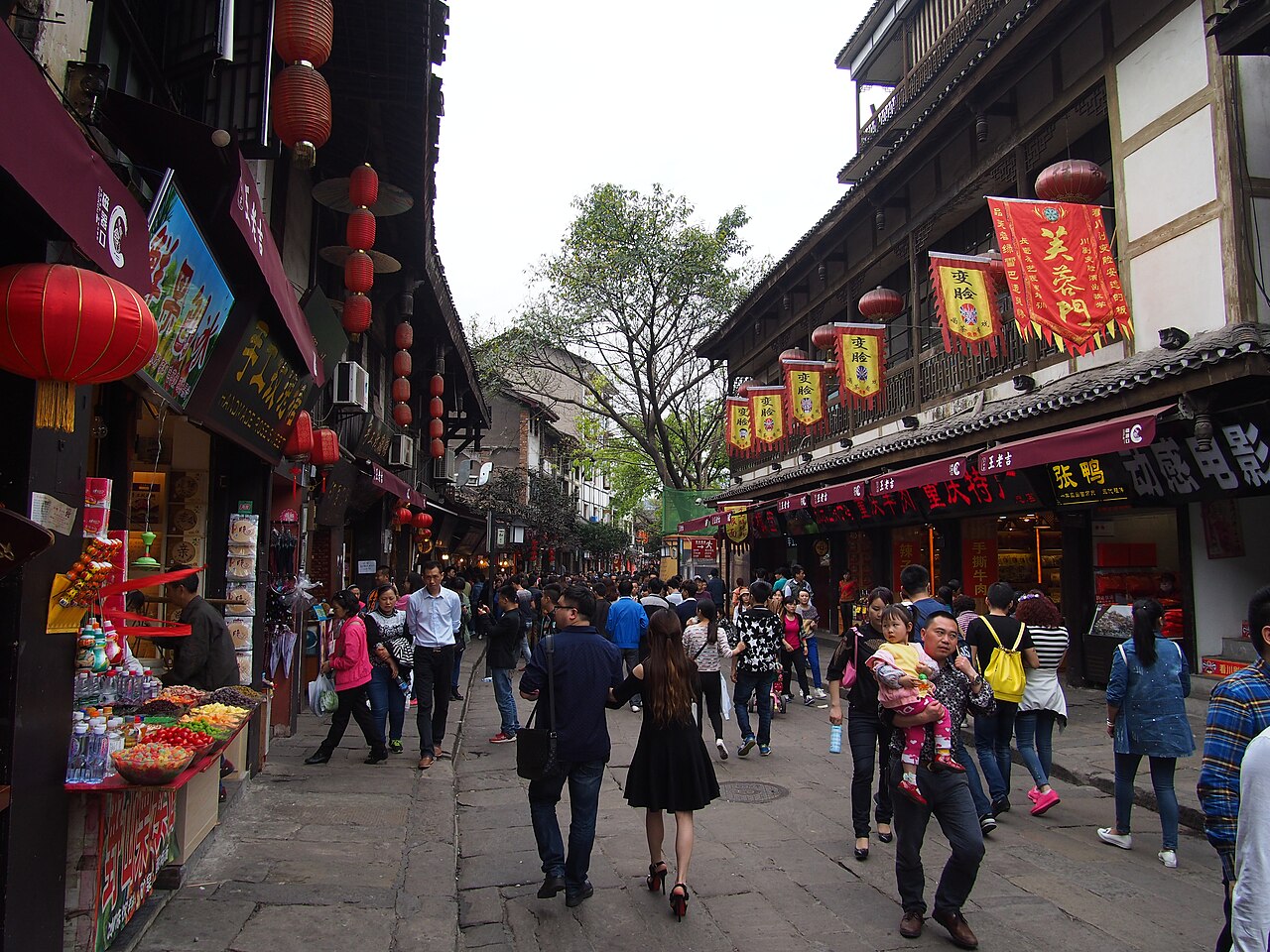
Liziba, 李子坝, is a transport-and-neighbourhood stop, not a reason to obstruct a working station or road. Use designated public viewing space and leave commuters room. Ciqikou, 磁器口, offers a different old-street outing farther from the central peninsula. Crowds and stairs may make a short visit sufficient. River cruises and the cableway should be separately checked with their actual operators for weather, tickets and boarding points; no service is included automatically in a city sightseeing plan.
Order hotpot and noodles to suit your tolerance
Read the full Chongqing food guide for where to eat and how to order.
The municipality's food-industry account identifies hotpot, 火锅, and Chongqing xiaomian, 重庆小面, as prominent local foods. A hotpot meal works well as the main event of an evening: choose a broth you understand, ask about spice level and the ingredient prices, and confirm whether sauces or other additions are charged separately. A split pot may help a mixed group, but confirm the actual broths rather than assuming one side is mild.
For a quicker meal, try xiaomian or hot-and-sour noodles, 酸辣粉, and request the chilli level before preparation. 'A little spicy' is relative, while a dish without obvious meat may still contain animal stock or fat. Carry written dietary requirements and ask about peanut, sesame and other relevant ingredients. Keep the first meal after arrival straightforward; eating a very spicy late dinner is not a requirement for experiencing Chongqing.
An original three-day route grouped by geography
Day one: begin around Jiefangbei, eat nearby and continue toward the Chaotianmen waterfront if the weather and walking route suit you. Rest before an evening Hongyadong-area visit. Choose the specific river-level or upper-level approach deliberately, and leave time to escape a crowd. If arrival was late the night before, shorten this to one neighbourhood and a meal.
Day two: visit the Three Gorges Museum after checking its opening notice, then use rail or a car to connect to Liziba. Add the Eling, 鹅岭, area only if the extra climb fits your energy; it is an optional extension rather than a required walk from the museum. Finish with an unhurried dinner. On a wet or very hot day, preserve the museum and reduce exposed hill walking.
Day three: choose Ciqikou and a nearby Shapingba, 沙坪坝, outing, or spend a slower day in the neighbourhood around your hotel. Keep the final afternoon light if you have an onward train. Dazu, 大足, and Wulong, 武隆, are separate regional excursions requiring their own transport and admission plan; they are not quick additions between central-city sights. With two days, retain the peninsula day and the museum/Liziba day.
Let elevation, heat and rain set the pace
Treat a walking-distance estimate as incomplete until you know the elevation and street connection. For limited mobility, ask the hotel and venues for the exact step-free entrance, lift exit and vehicle drop-off level. Some shortcuts are stairways; a longer road approach can be more usable. Do not assume every elevated pedestrian bridge or historical lane has a working lift.
Hot, humid conditions favour shorter outdoor blocks and a planned indoor rest. Rain makes steps and sloped paving slippery; river fog or low cloud can obscure a view even when a viewpoint is open. Keep a museum, café or food-focused alternative and avoid tying the whole trip to a single skyline photograph. If a walking route feels wrong, stop and verify the road level instead of following the blue dot down another flight of stairs.
Compare the whole journey to Chengdu or another next stop
Chengdu, 成都, is a natural onward choice for a different Sichuan Basin city experience. Use 12306 for your travel date and compare the departure station in Chongqing, the arrival station in Chengdu and both hotel transfers. A slightly longer train ride may still produce an easier total journey. Do not assume every Chengdu service leaves North, or that a train to a city name arrives at its most convenient station.
Save the issued order and carry the original booking passport. If the railway gate does not read it, ask for the staffed channel; do not change the passenger document details casually after purchase. For arrival trouble, airport or railway staff are the first practical contact. For a lost taxi item, retain the receipt, plate and app trip record so the relevant operator can identify the vehicle.
Places in pictures

Common questions
Is Chongqing easy to explore on foot?
Selected neighbourhoods are rewarding on foot, but gradients, stairs and disconnected road levels make flat-map distances misleading. Combine short walks with metro and occasional taxis.
Do flights still use Jiangbei T2?
The checked airport notice states that domestic and international passenger flights moved to T3 after the remaining airlines transferred in December 2025. Always confirm your individual flight's current terminal.
Do I need to reserve the main Three Gorges Museum?
The operator removed advance reservations from October 2025, retaining valid-ID and capacity checks. Check the latest opening notice and carry your passport; temporary closures or queues remain possible.
Can I add Wulong to a spare afternoon?
Do not plan it as a casual central-city addition. It needs its own regional transport, last-mile and attraction plan. Allocate a separate excursion day or keep your visit within the city.
Sources & checking notes
- Chongqing Government / Jiangbei Airport — T3 airline consolidation, November 2025
- Chongqing State-owned Assets Supervision Commission — Chongqing East opening, June 2025
- Chongqing Government / People's Bank local branch — overseas-card counter ticket purchases, August 2024
- Chongqing Government / rail operator — physical pass payment methods, January 2025
- Chongqing China Three Gorges Museum — removal of advance reservations, September 2025
- Chongqing China Three Gorges Museum — transport approaches and visitor contacts
- Chongqing China Three Gorges Museum — current official notices
- Chongqing Government — regional hotpot and noodle food context, May 2024
- China Railway 12306 — official station and ticket query
Sources checked on 6 November 2026. Workflows, routes and troubleshooting suggestions are editorial guidance. Fees, eligibility, reservations and local services can change; follow the official links before relying on a rule.
Original synthesis of public information and editorial planning advice. We have not performed a live account, payment or on-site test of every workflow. This guide does not claim a firsthand visit or professional accreditation.